New Publication: Elucidating the Chemistry Behind Thiol-Clickable GelAGE Hydrogels for 3D Culture Applications

We are excited to share that our newest manuscript has been published in Gels! Congratulations to Sara for her first paper with the lab!!

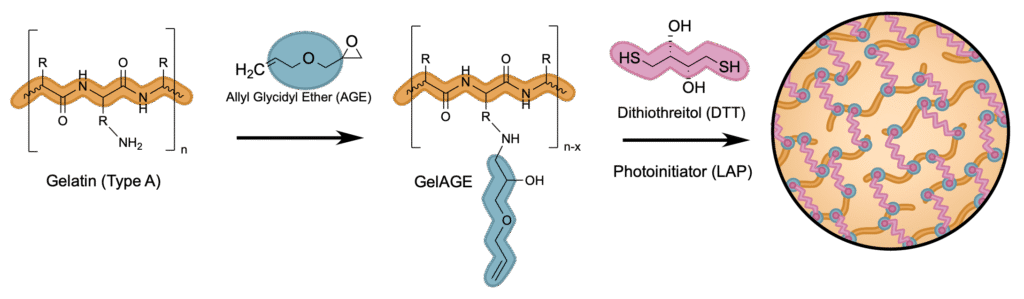
Our study investigates a novel thiol–ene based GelAGE hydrogel system designed to overcome key limitations of traditional covalently crosslinked gelatin hydrogels. By elucidating the molecular mechanism behind gelatin functionalization and crosslinking, we established a mechanistic framework for tunable, biocompatible 3D matrices that better mimic the viscoelastic and structural properties of cartilage. These insights pave the way for advanced in vitro models for osteoarthritis research and future applications in tissue engineering.

Abstract

Although covalently crosslinked gelatin hydrogels have been investigated for use in 3D cell culture due to inherent bioactivity and proliferation within the denatured collagen precursor, the stability of the matrix, and relatively inexpensive synthesis, current systems lack precise control over mechanical properties, including homogeneity, stiffness, and efficient diffusion of nutrients to embedded cells. Difficulties in modifying gel matrix composition and functionalization have limited the use of covalently crosslinked gelatin hydrogels as a three-dimensional (3D) cell culture medium, lacking the ability to tailor the microenvironment for specific cell types. In addition, the currently utilized chain-growth photopolymerization mechanism for crosslinking hydrogels has a potential for side reactions between the matrix backbone and components of the cell surface, requires a high concentration of radicals for initiation, and only cures with long irradiation times, which could lead to cytotoxicity. To overcome these limitations, a superfast curing reaction mechanism, in which a thiol monomer reacts efficiently with non-homopolymerizable alkenes, is suggested. This mechanism reliably produces a well-defined matrix that does not require a high radical concentration for photoinitiation. Mechanical customization of the hydrogel is largely achievable through variation in degree of functionalization of the gelatin backbone, dependent on reaction conditions such as pH, allyl concentration, and time. This work provides a mechanistic framework for GelAGE hydrogel fabrication by elucidating the molecular mechanism of gelatin functionalization with AGE and the thiol-ene crosslinking reactions controlling network stiffness. These insights provide the foundation for engineering hydrogels that mimic the viscoelastic and structural characteristics of cartilage, enabling advanced in vitro models for osteoarthritis research.
Find the full paper here:

S. Swank, P. VanNatta, M. Ecker, Elucidating the Chemistry Behind Thiol-Clickable GelAGE Hydrogels for 3D Culture Applications. Gels2025, 11(11), 874. https://doi.org/10.3390/gels11110874
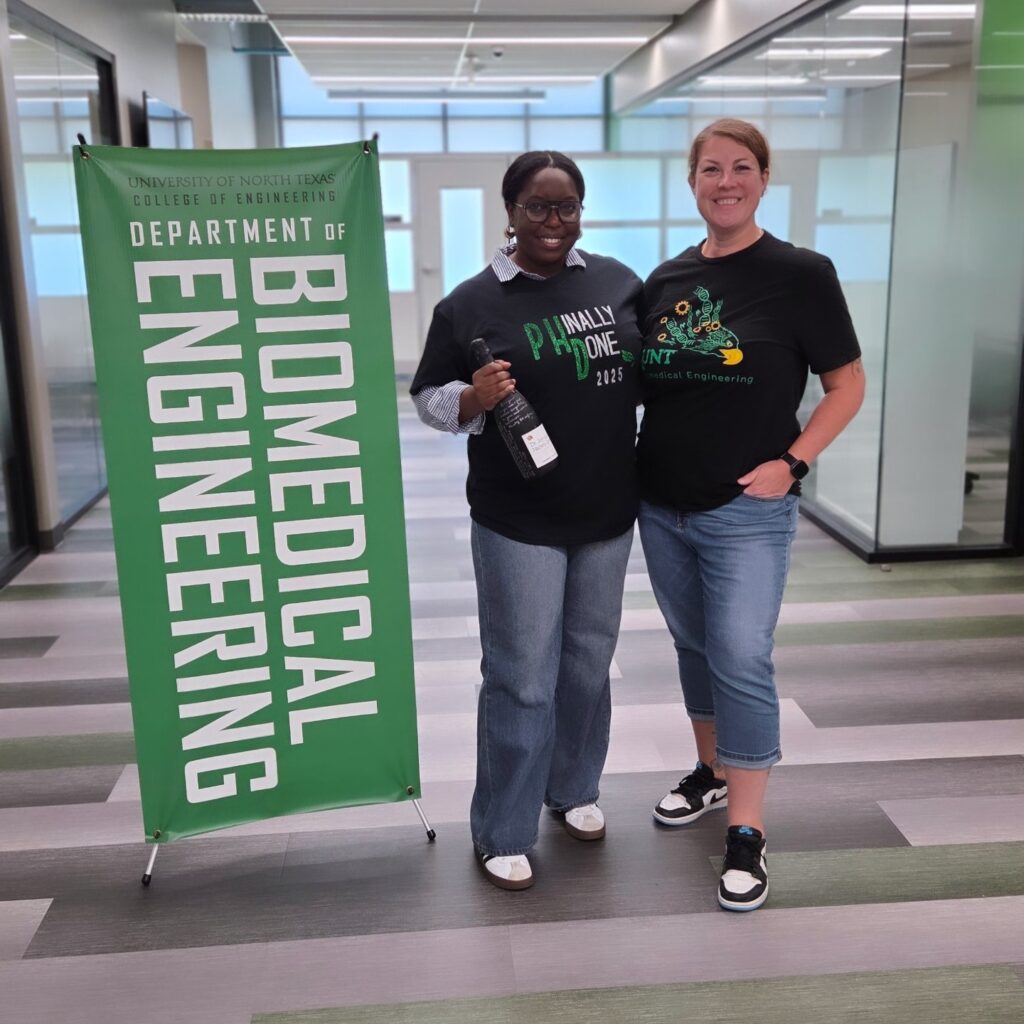
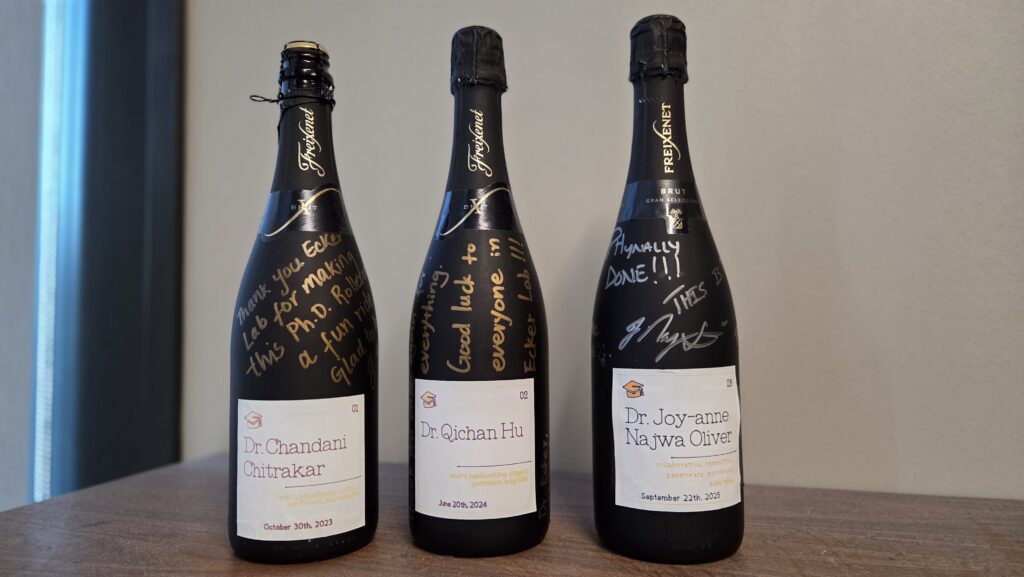
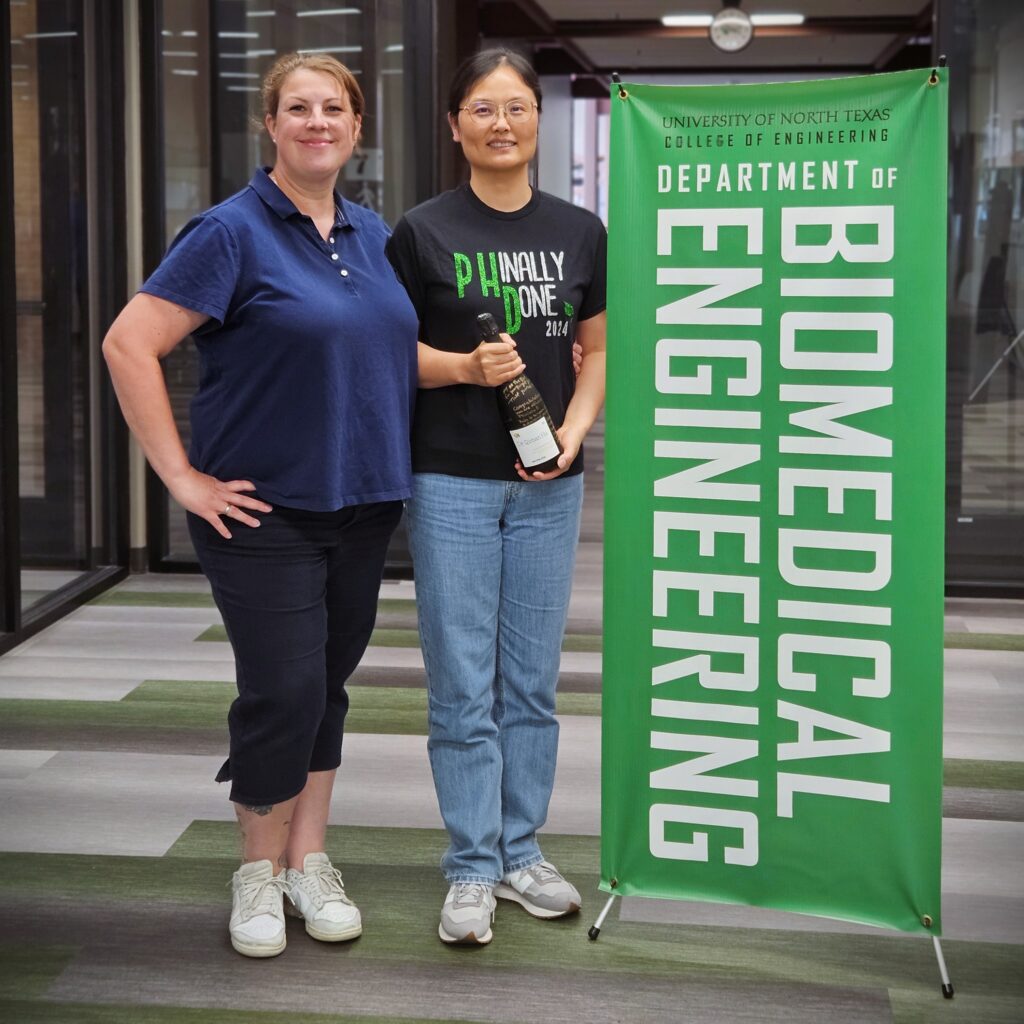
Congratulations to Dr. Joy-anne Najwa Oliver on Her Successful Ph.D. Defense!

We are proud to celebrate Dr. Joy-anne Najwa Oliver for successfully defending her doctoral dissertation titled
“Investigating the Effect of Boron Oxide Substitution in the 6P55 Glass Composition for Designing an Appropriate Bioactive Coating for Ti6Al4V: Melt-Quench Synthesis and Computational, Thermal, and Biological Analysis.”

Joy-anne’s research provides valuable insights into the development of boron-modified bioactive glasses for biomedical coatings, advancing the design of materials that can enhance the biocompatibility and performance of titanium-based implants.

Her work was co-advised by Dr. Melanie Ecker (Department of Biomedical Engineering) and Dr. Jincheng Du (Department of Materials Science and Engineering). This interdisciplinary collaboration highlights the strength of UNT’s research community in connecting materials science and biomedical innovation.

Congratulations, Dr. Oliver, on this incredible achievement and for becoming the third Ph.D. graduate from the Ecker Lab! We can’t wait to see where your talents and passion for research will take you next.

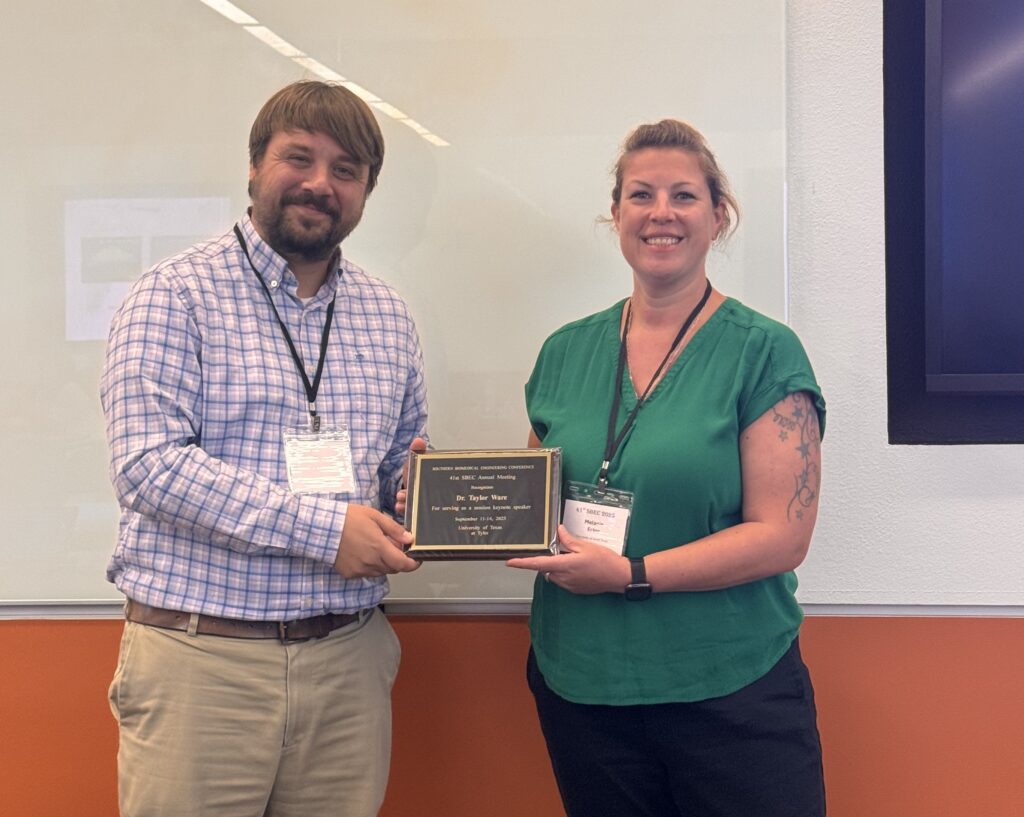
Ecker Lab at the 41st Southwest Biomedical Engineering Conference (SBEC)

The Ecker Lab proudly participated in the 41st Southwest Biomedical Engineering Conference (SBEC), hosted at the University of Texas at Tyler. It was a fantastic weekend filled with innovative research, engaging discussions, and opportunities to connect with fellow scientists and engineers across the biomedical field.

Dr. Melanie Ecker served on the conference planning and organization committee and had the pleasure of hosting the Biomaterials session, which featured keynote speaker Dr. Taylor Ware from the Texas A&M.

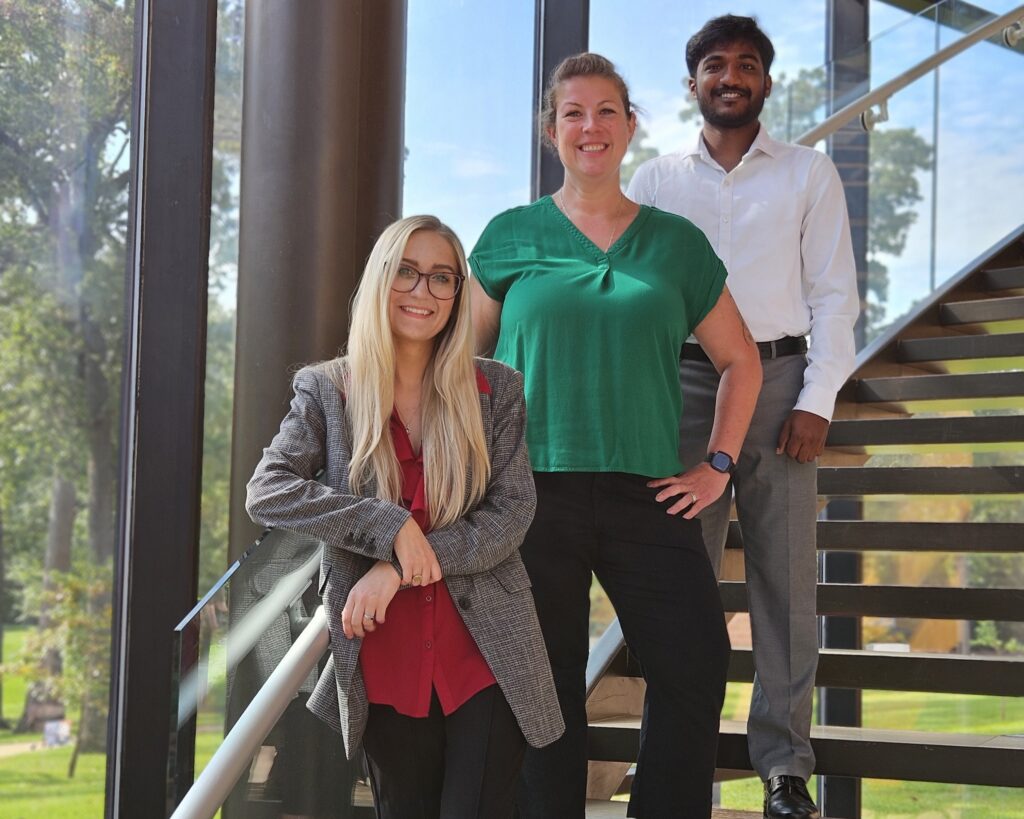
Our lab was well represented by two of our talented researchers:

  • Sara Swank presented her work on Thiol-clickable hydrogels, demonstrating how our tunable biomaterial system supports cell culture and therapeutic testing.
  • Raj Kumar Pittala showcased his research on shape memory polymers for biomedical applications, including the development of biodegradable heat-shrink tubing for minimally invasive wound repair.

Both presentations were met with enthusiasm and thoughtful questions, highlighting the Ecker Lab’s ongoing contributions to smart biomaterials and regenerative medicine research.

We’re grateful to Dr. Santosh Aryal and the SBEC team for organizing such a successful conference and for providing a platform to share and celebrate cutting-edge work in biomedical engineering.

Stay tuned for more updates as we continue advancing research at the intersection of smart polymers, tissue engineering, and human health.

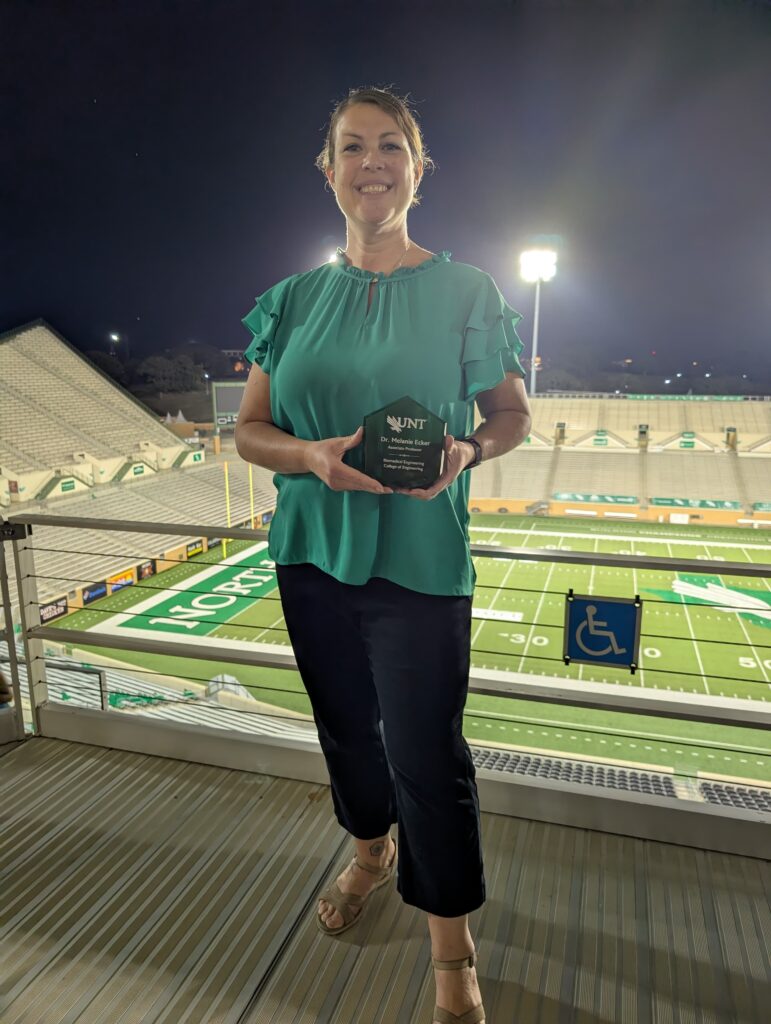
Celebrating Dr. Ecker’s Promotion to Associate Professor with Tenure!

Congratulations to Dr. Melanie Ecker on Promotion to Associate Professor with Tenure!
We are thrilled to share that Dr. Melanie Ecker has been promoted to Associate Professor with tenure in the Department of Biomedical Engineering at the University of North Texas!

This milestone recognizes Dr. Ecker’s outstanding contributions to research, teaching, and service. Her innovative work on smart polymers, hydrogels, and biomedical shape-memory materials continues to advance the fields of biomaterials and regenerative medicine. Beyond her research achievements, Dr. Ecker is deeply committed to mentoring students, fostering collaboration, and building a supportive academic community.

Please join us in celebrating this well-deserved achievement and the exciting next chapter for the Ecker Lab and its growing impact on biomedical innovation!

Annual Lab Summer Party: A Delicious and Fun-Filled Celebration

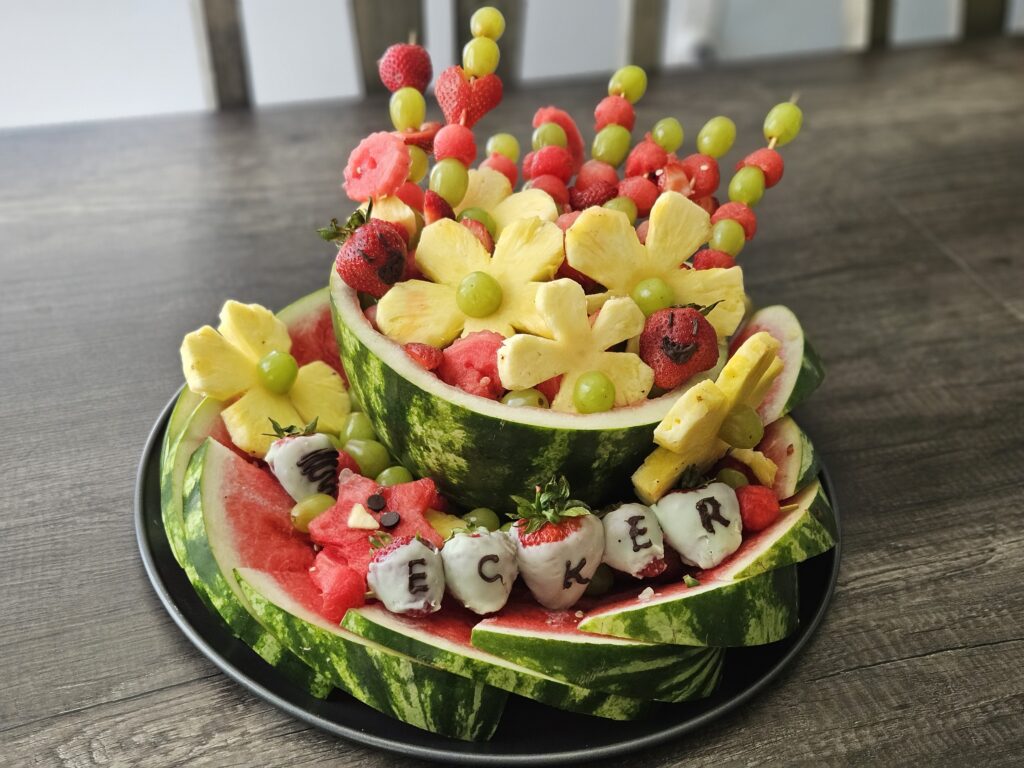
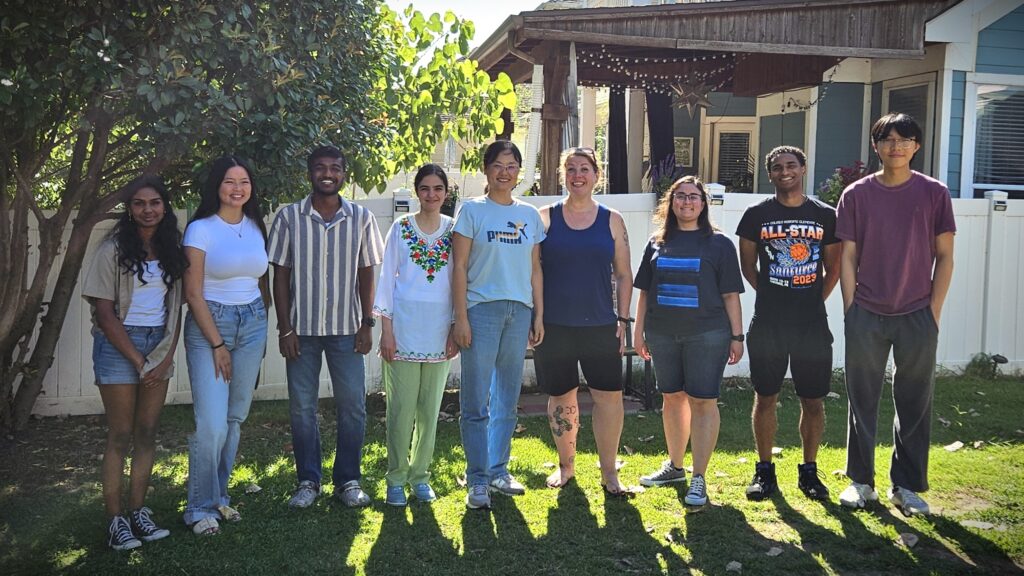
We’re excited to share some highlights from our annual lab summer party, held this June. This year’s celebration was a potluck with an amazing variety of delicious foods brought by our talented and creative lab members.

We had a fantastic and creative fruit bowl, mouth-watering burgers and hotdogs, buttery corn on the cob, flavorful biryani, crispy egg rolls, and a show-stopping red velvet cake. The spread was a true feast, and everyone enjoyed sampling all the tasty dishes.

Beyond the incredible food, the party was filled with laughter, fun activities, and great conversations. It was a perfect chance for everyone to relax, enjoy each other’s company, and celebrate our achievements together.

We look forward to many more gatherings like this that help us bond as a team and create lasting memories. Here’s to another year of exciting research and good times!

Celebrating the Graduation of Qichan Hu: A Landmark Achievement in Our Lab’s Journey

We are thrilled to share another momentous achievement in our lab’s history—the graduation of Qichan Hu, our second PhD student! Qichan has been an integral part of our research community, and her dedication, passion, and hard work have left an indelible mark on our lab.

The Journey:

Qichan embarked on her doctoral journey with us in the Fall of 2019, bringing not only her academic prowess but also a contagious enthusiasm for pushing the boundaries of scientific exploration. Throughout her years with us, she has been a beacon of inspiration for her peers and an invaluable asset to our research endeavors.

Research Contributions:

Qichan’s research has been nothing short of groundbreaking. Her innovative work on the Development of GelMA-Alginate Interpenetrating Network Hydrogel for Establishing an In Vitro Osteoarthritis Model to Screen MMP-13 Inhibitors has not only expanded our understanding of biomaterials but has also garnered recognition within the scientific community. She has published several key papers during her time in the lab, including:

  • Screening of MMP-13 Inhibitors Using a GelMA-Alginate Interpenetrating Network Hydrogel-Based Model Mimicking Cytokine-Induced Key Features of Osteoarthritis In Vitro.
  • Precision Engineering of Chondrocyte Microenvironments: Investigating the Optimal Reaction Conditions for Type B Gelatin Methacrylate Hydrogel Matrix for TC28a2 Cells.
  • Overview of MMP-13 as a Promising Target for the Treatment of Osteoarthritis.

Her contributions have been instrumental in shaping the direction of our lab’s research and will undoubtedly influence the field for years to come.

Collaboration and Leadership:

Beyond her individual achievements, Qichan has been a collaborative force within our lab. She has fostered a culture of teamwork, inspiring fellow students and researchers to work together toward common goals. Her leadership qualities have been evident in several publications, where she spearheaded the manuscript preparation.

Qichan’s Impact:

As Qichan walks across the stage to receive her well-deserved doctoral hood, we reflect on the lasting impact she leaves on our lab. Her resilience, intellectual curiosity, and commitment to excellence have set a high standard for future graduate students to aspire to.

Looking Ahead:

Qichan’s success is a testament to the vibrant research environment we strive to cultivate in our lab. As we celebrate this milestone, we eagerly anticipate the continued success of our graduate students, each contributing to the rich tapestry of discoveries that define our research community.

Join us in extending heartfelt congratulations to Qichan for her remarkable achievement! As she takes the next steps in her career, we are confident that her journey will continue to inspire and shape the future of scientific inquiry.

Congratulations Grads!

We want to congratulate all our recent graduates from UNT Biomedical Engineering!

Engineering | UNT Commencement Fall 2021
Doctoral and Master’s I | UNT Commencement Fall 2021

Graduates from our lab are:

  • Sukhpreet Singh (MS in BMEN)
  • Eric Hedrick (MS in BMEN)
  • Joy-Anne Najwa Oliver (MS in BMEN)

And our Lab Manager:

  • Edward Gates (MS in BMEN)

Congratulation to all of you!

Congrats Sukhpreet

Congratulations to Sukhpreet Singh for successfully defending his Maters’ Thesis on “IN VITRO ELECTROCHEMICAL EVALUATION OF BIOELECTRONIC PROBES”. Sukhpreet was the first M.S. student that did his thesis with our lab and we couldn’t be prouder of his accomplishments.

We are wishing you all the best in your future endeavors!

Independent Study & Mentorship Program

I am honored that I could be part of the Frisco ISD Independent Study and Mentorship (ISM) program as a mentor.

FISD ISM is a Professional program meant for academically advanced students who go through a rigorous and competitive selection process before being accepted. Within this program students explore their desired field and research about a specific topic and display their knowledge through an original work and product.

Manogna’s potfolio

But let me start from the beginning. Last year in December, I was approached by Manogna Jonnalagadda, an 11th-grade student from Centennial High School in Frisco. She was asking if I was available for an interview, that she wanted to conduct as part of her ISM program to learn more about biomedical engineering. And sure enough, I agreed. During this interview, Manogna told me more about the ISM program and asked me to become her mentor, which I happily did.

Manogna was interested in spinal cord injury and ways to treat that. During her first part of the project (original work), she was doing research on spinal cord injuries and treatments, including spinal cord stimulation, and was creating an interactive website as a helpful guide. For the second part (final product), she was researching nerve conduit devices for nerve repair and was writing a review article to summarize her findings.

During the mentored phase, we had weekly meetings to plan her final product, discuss her findings, review her milestones, and talk about science and engineering. It was a blast for me to see how Manogna managed to accomplish her goals and how her final product came to life, and all this in the midst of a pandemic.

In March, Manogna came to UNT to see our labs and to make her first own polymer. That was our first and only in-person mentor meeting we had, and it was a lot of fun.

At the end of April was the “Final Presentation Night” at Centennial High School and Manogna was presenting her final product. She did an awesome job presenting her work and seemed like she never did anything else in her life. So professional and confident! I was beyond proud to see what she had accomplished and it was a great honor for me to be part of her journey. I would always do it again.

To learn more about this fantastic young woman and her research, please visit her online portfolio.

And here is a link to her final presentation.